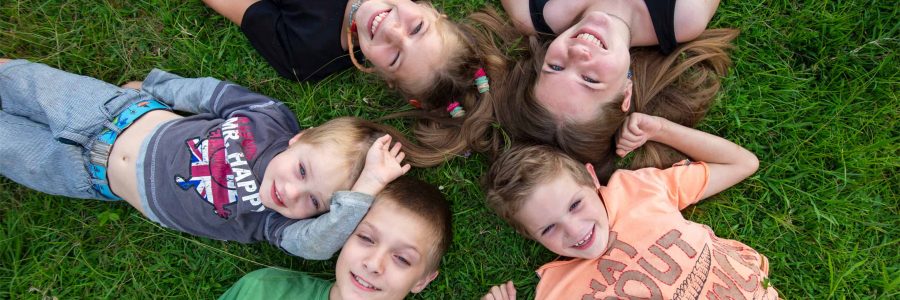
So ones in a while we receive questions about the children.
- Is it wise to take kids with you to the mission-fields?
- How do mission organisations respond on children?
- What about schooling?
We would like to answer these questions on this page. The answer on the first question can be read below. The others will follow.
Please let us know if you have a question that is relevant for this page: Contact
Is it wise to take kids with you to the mission-fields?
Before we answer the actual question we would like to look at it from an different angle. When we look at other missionaries we see that they mostly leave while they are still very young. Than after a while, when we read up on them, we found out that they were blessed with children. That is great of course because that is the way life goes. But now we have a question. Why is it that people do not mind missionaries to receive children whilst on the field and at the same time question whether it is responsible to receive them before one goes? In both cases children grow up in two or more cultures. Children, born on the field, will have to deal with a return (for short or long term to the culture of their parents. It will be no different for our children. They are used to the Netherlands and will have to get accustomed to an other culture when we leave for Madagascar.
Now the actual question. We are fully aware of the responsibility we have over our children. This made that we were consciously looking for a suitable location. Sadly enough there are many unsafe countries. Than there are projects that are simply not suitable for families. One such project is the AIM Extreme Lesotho team.1 The missionaries have to travel along with the shepherds under very primitive circumstances. Together with AIM we have examined the possibilities and came up with Madagascar. The people of Madagascar are not hostile towards white people. The landscape where we are going to live is save and the roads are relatively good. Next to that we are only going to work among people who invited us, thus we will be welcome. Matters of hygiene and medical care are taken very serious. Our house will have a concrete floor to avoid rainwater flowing in. Appropriate sanitary measures will be taken. And we will have a connection (telephone and internet) to contact the home front and, when necessary, important people or other authorities. No, we will have not the same luxury as in Holland but we will have the most important necessities in place.
All in all it will be a unique experience for the children. An experience that will have its advantages in a world that becomes more and more globalist. The children will quickly learn that other habits are not bad by definition… just different. They will also learn how to function in a strange environment. Adapting to the people, language learning, discovering what habits they can use and what they should not use. This knowledge shall be in their advantage when they grow up.
AIM is aware of the impact a move can have on children. To help they have organised a course called Europe Based Orientation (EBO). We attended this course in 2014. The children had their own programme in which they learned a lot about being a mission-kid. This course will be extended in Africa. When we leave for Madagascar we will receive a Africa Based orientation (ABO) which will take three weeks. Besides these two important courses we also attended a course in the UK which was completely about families going abroad. Just like the EBO the children received their own education during this course as well. In addition to these organised courses we do a lot about world orientation at home. This means that the children learn many things about different cultures and countries. Ever since we know that we are going to Madagascar these lessons are more concentrated on that country. What kind of people live there, what does the area look like, what are their habits and languages. The children are looking forward to go! And of course there is this feeling of ‘leaving behind’, which the oldest two can pretty well describe. But all in all, they cannot wait untill we go. We belief that all this preparation will contribute to the well-being of the children and will make the transition much smoother.
Endnotes:
- ↑ The AIM Extreme Lesotho team: http://eu.aimint.org/lesotho-shepherds-basic-living/ and [wp_fancybox_media url=”https://vimeo.com/73642590″ type=”vimeo” width=”640″ height=”360″ hyperlink=”click here to see a video about these shepherds.”]
How do mission organisations respond on children?
The danger of answering this question is that people might feel hurt by hearing it. However, we would like to try with the trust that the reader realises that we have no intentions to judge the choices that have been made in the past.
The presupposition of this question was that the mission couple would not have as much time for the work when they have five kids around to take care for. An understandable, but very Western thought. Why Western? Because this thought suggests that both the mother and the father need to do the work as much as possible. To accomplish that, one could say that children are a bit of a burden. This thought use to be present in mission work as well. It was not unusual to send children to a boarding-school or to find others means to free up the parents time.
We have heard remarks from people whether the missionaries were wrong in doing so. Our answer is simple and short: No! Nevertheless, with the passing of the time also the insights are changed. Missionaries brought big sacrifices in their families, and we have great respect for their works and efforts. Just like these pioneers and with the lessons of the generations before us and the new insights we want to see God’s kingdom grow!
We al ready mentioned the term ‘Western’. In many non-Western cultures people do not leave the education and upbringing of their children easily to others. Whenever the mother works outside the house one can find the children close to her. Family ties are very important and children often mean security for the future. Besides that, many groups see children as a blessings of God. The more children one has, the more God blessed this person. Organisations noticed that it is harder for individual missionaries to make contact with the local people. This seems strange as the individual has more time than the missionaries with a family. The work done by these individuals are enormous! But when it comes to social contacts the families are in the advantage. Children around the world have the habit to play together. Parents have a common topic of interest which can speed up the social contacts. In cultures where children are this important, the locals will think it is strange when those Western children are send away from home.
Of course one can find many more examples but we trust you will see the logic of our decision. Mission organisation are happy with all missionaries but have certain situations in which they prefer whole families. AIM Is no different in this. AIM responded very enthusiastic on our longing to serve, as a family, on Madagascar. The announcement of Katja’s pregnancy (2015) resulted in many happy reaction among the AIM-workers. As for us, we are glad to go together. There are these situations in which the individual worker (although supported by the organisation) needs to deal alone with all the emotions—a problem acknowledged by many of them. This can be less of a problem for families, who always have each other. AIM is well aware of this problem for singles. They do their utmost to help them as it would be a pity to see them return to their country because of a burn-out or something else. Not to say that this cannot take place among families but they do have some advantage above singles.
We would like to end this answer with a short anecdote out of our own life:
A while ago Jurgen had a conversation with a Dutch lady and a lady from Eritrea. The Dutch lady heard about Katja’s pregnancy and responded with a joke that now we surely will not go to Africa? Jurgen’s answer was that the Africans finally start to take us seriously. All this time the lady from Eritrea listened and did not realise that we where joking. She answered on Jurgen’s responds and said: “you are absolutely right! In Eritrea we would think it is strange when a man without children comes and talks about God as God’s blessing is apparently not on him.”
We would not like to go down this road but it illustrates nicely how different people groups can view the value of big families.